The people supporting those that grow our food are being left behind.

BEEKEEPERS ARE PRODUCERS TOO.

RAWG is a 501(c)(3) working group dedicated to supporting the U.S. beekeepers who grow our food: building clean, verifiable domestic organic honey and the livelihoods behind it.

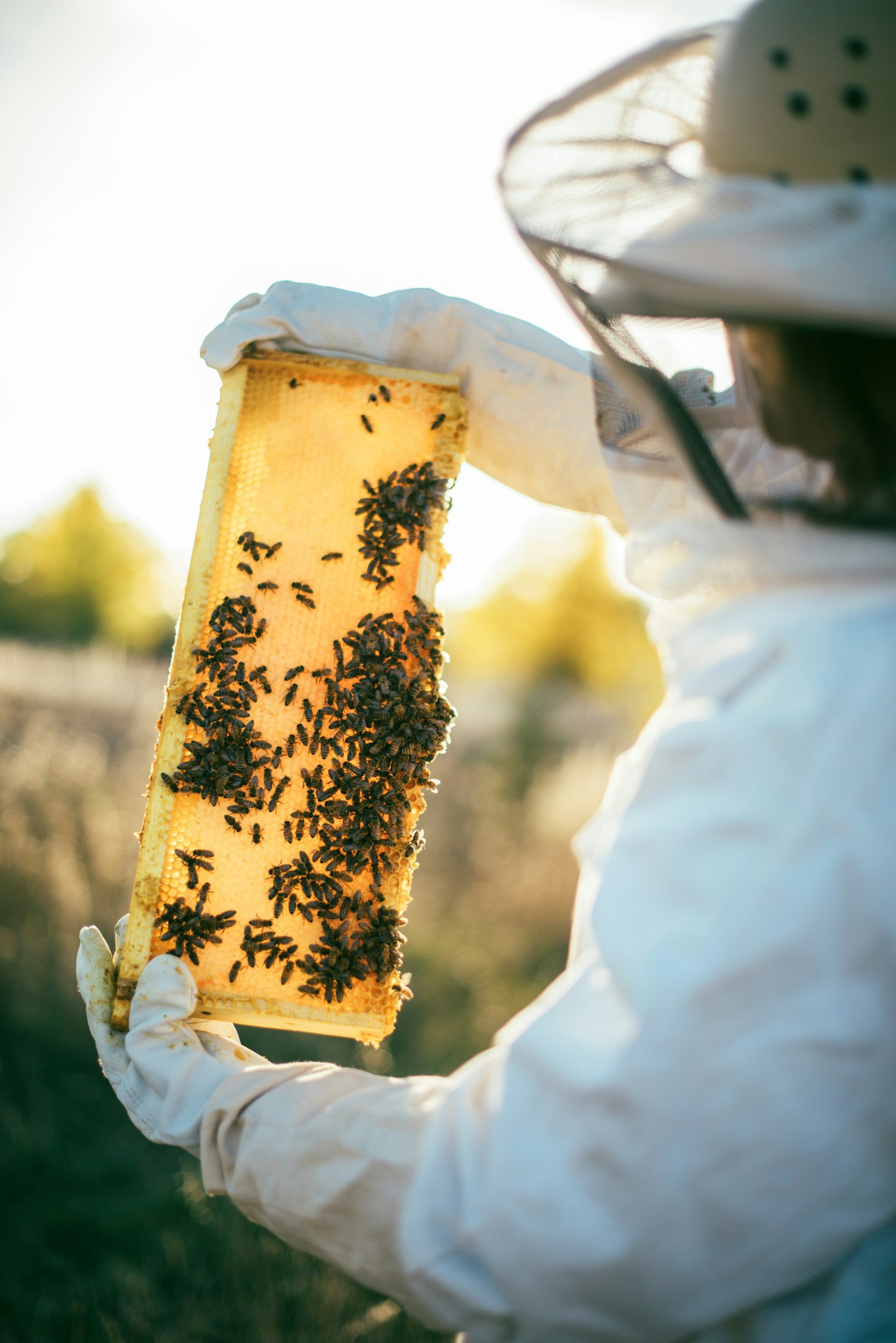
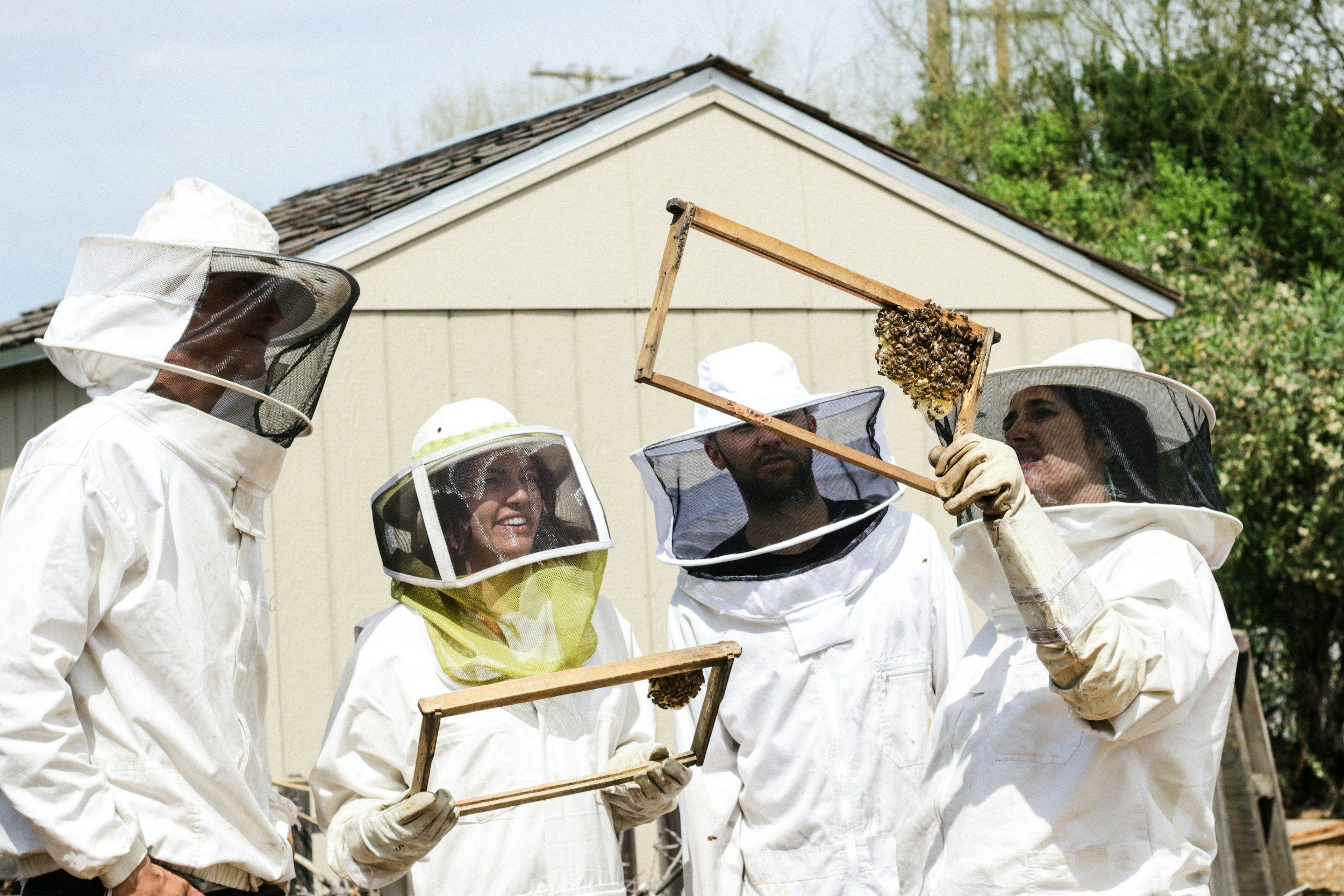
Behind every almond, every apple, every berry on your plate is a beekeeper who drove through the dark to set hives before dawn. Managed honey bee colonies contribute over $15 billion in annual crop value through pollination services alone and one in three bites of food depends on their work. Beekeepers tend the hives, manage the colonies, and move across the country to meet the seasons. They are farmers in every sense of the word, and they are the quiet foundation of the American food system. That foundation has been neglected for too long.

Beekeepers don't get subsidies. They don't have a price floor. And right now, they're losing on every front — to fraud, to disease, and to a system that doesn't recognize their labor.

THE THREATS ARE COMPOUNDING + ACCELERATING.

  • Honey is among the most adulterated foods in the world. A coordinated EU test flagged 46% of imported honey as suspected of being cut with cheap syrup. Every fake batch pushes prices below what an honest U.S. producer can survive on.

    EU Coordinated Action / European Commission JRC, 2023

  • With honey priced below the cost of production, beekeepers survive by renting bees for pollination — turning honey into a by-product and the beekeeper into a contractor. The honey income that once cushioned a hard year is gone.

    USDA NASS / industry data, 2024–25

  • U.S. commercial beekeepers lost roughly 62% of their colonies in 2024–25 — about 1.6 million colonies and $600M+ in losses — the steepest die-off in decades, driven by Varroa mites, pesticides, and pathogens.

    Project Apis m. / Honey Bee Health Coalition, 2025

  • There is no recognized regenerative or organic honey standard. That means beekeepers can't prove, or get paid for, the clean, high-quality honey they actually produce. The market can't reward what it can't verify.

    Regenerative Apiculture White Paper, RAWG

Filling the gap policy left behind.

We work directly with domestic beekeepers to establish clean, verifiable standards, advocate for fair economic recognition, and make the case that honey is a food and beekeepers are its farmers.

Where federal policy has stalled and industry standards have fallen short, RAWG steps in, developing scalable models that strengthen pollinator health, food transparency, and the long-term resilience of the agricultural system that depends on both.

SUPPORT OUR PROJECTS

Beekeeper Pilot Programs

Supporting beekeepers across diverse U.S. landscapes by implementing regenerative management practices that enhance honey purity and colony resilience.

Honey Integrity & Verification

Testing, monitoring, and traceability systems that verify honey purity from hive to shelf — free of adulterating syrups, ag chemicals, and heavy metals — and identify contamination pathways.

Standards & Framework Development

Informing the future regenerative and organic frameworks for domestic honey, grounded in real-world practice, so the market can finally reward quality it can verify.

Bees as Biosensors

An active grant initiative using hive data to verify organic food-system integrity and healthy landscapes — an entirely new service organic beekeepers can offer. We're seeking matching funds.

"Land use and forage loss are the biggest challenges facing the apiculture industry today. We need to ensure the agricultural system provides forage and habitat for bees and all pollinators."

Dr. Marla Spivak, MacArthur Fellow & Distinguished Entomologist

LEVELS OF IMPACT + DONATION TIERS

What Your Donation Supports

Donations assist in funding the beekeeper, the science, and the standard, supporting the research, relationships, and infrastructure that make verified regenerative organic apiculture possible.

  • Third-party tested honey, free from adulterating syrups, ag chemicals, and heavy metals — traceable from hive to shelf.

  • Salaries, tools, and testing for the skilled professionals managing regenerative organic pilot sites across the U.S.

  • Data verifying that regenerative practices improve colony health and reduce Varroa mite infestation — giving beekeepers a science-backed story.

  • Expanded services organic beekeepers can provide — using hive data to improve organic food-system integrity and verify healthy agricultural landscapes.

Join the Cause

Every hive matters. Every dollar is traceable to a real beekeeper doing real work. Every gift at this level goes directly to the beekeeper keeping those colonies alive.

  • A beekeeper checks every hive by hand — inspecting frames, reading colony behavior, catching problems before they spread.

    Your $50 covers one month of that monitoring at a pilot site.

  • One hive. One beekeeper tending it through the season — managing Varroa pressure, tracking forage, keeping the colony alive and productive.

    Your $100 sponsors that hive for a full season in our regenerative organic program.

  • Honey fraud undercuts every honest beekeeper in the country. A single purity test — checking for adulterating syrups, ag chemicals, heavy metals — is how we prove their honey is real and price it accordingly.

    Your $500 funds one of those tests. One beekeeper's work gets verified.

  • Access to clean forage changes everything for a beekeeper. Placing hives near an organic farm means fewer pesticide exposures, healthier colonies, and honey worth more at market.

    Your $1,000 makes that placement possible — and gives a beekeeper a fighting chance.

Lead the Charge

The beekeepers who make your supply chain possible have no safety net. You can change that. Partner with us to build the verified standard your industry needs.

  • Beekeepers have always known their honey is cleaner than what's coming in from overseas. Now we're proving it — with university-led studies at KSU, MSU, and UNL that give domestic producers the science to stand behind.

    Your $10K funds that research. A beekeeper finally has data on their side.

  • Running a regenerative pilot site means paying a skilled beekeeper a living wage to do this right — not as a side hustle, but as a profession with standards worth defending.

    Your $25K covers a third of that cost for a year. One site. One beekeeper, fully supported.

  • The public doesn't know beekeepers are in crisis. A mini-documentary, targeted PR, and presence at the right conferences changes that — and builds the consumer demand that sustains beekeeper livelihoods long after the funding ends.

    Your $40K puts the beekeeper's story in front of the people who can act on it.

  • Without a verified standard, a beekeeper can't prove their honey is worth more — so the market won't pay more. Two years of rigorous testing at one site builds the record that changes that calculus.

    Your $60K gives a beekeeper two years of proof. Proof that finally commands a fair price.

  • Regenerative apiculture requires expertise. A skilled beekeeper with the right tools — extractors, testing kits, protective gear, transport — can manage hives at the standard the industry has never had before.

    Your $75K recruits one beekeeper into the program, fully equipped, for a full year.

Transform the Industry

This is infrastructure the food system has never had. You can be the reason it finally exists. Your investment doesn't fund a program, it builds the foundation of an industry that has been operating without one for generations.

  • A complete site — hives, a compensated beekeeper, ongoing research, and the management to run it right. This is what a functioning regenerative organic apiculture program actually looks like. Not a study. A working model.

    Your $250K funds one from the ground up. A real beekeeper, doing real work, with real backing — for the first time.

  • One site proves it works. Multiple sites prove it scales. National expansion means more beekeepers brought into a system that actually supports them — across regions, climates, and crop systems.

    Your $500K multiplies the model. More sites. More beekeepers with a livelihood worth protecting. And a seat at the table shaping what comes next.

  • With $3.5M in private investment, we unlock federal research dollars and university matching to build a $5M+ program — anchored by the American Honey Institute at KSU, the first national center for beekeeping education, research, and certification this country has ever had. Beekeepers have been producing without standards, without recognition, and without infrastructure for generations.

    Your investment ends that. Not for one beekeeper. For the profession.

3% Cover the Fee

Invest in the HIVE today.

"The bee is more honored than other animals, not because she labors, but because she labors for others." — St. John Chrysostom

Support the producer. Protect the pollinator.

The bees were never the only endangered species. The beekeepers were. Back the people who steward them — and the standard that can finally pay them what their honey is worth.

Meet the Team